5 Ways to Convert a Prospect to a Customer

Now that you have your leads from HBW, what next?  How do you convert a lead to client?  Let’s first start out by stating that there is no secret recipe or magic potion that will provide overnight results.  A lead takes time to develop, and through consistent communication, a solid marketing strategy and proper nurturing, you can learn about your prospect’s needs and offer solutions and services for fulfilling them.

In previous posts, we have reviewed everything from amping up your email marketing campaign to leading more effective telephone sales.  All offer great ways to engage your prospects and should be considered and tailored to your campaigns and audience as you progress.  For the purpose of this post, we will explore tried and true approaches to conversations and meetings with your clients that add to your power of persuasion.  Here are five quick and easy reminders for persuasive sales:

  1. Organize Your Questions – Whether you are on the phone or holding an in-person meeting, time is of the essence. Use your meeting time wisely by organizing your points and questions in a strategic manner.  While you will want to take time to listen to your clients, you will also want to ask questions that drive your prospect back to your solutions.  Ask questions that pertain to issues that you can solve.  Reconfirm their stated interests and desires and be ready to offer concise solutions through your products and services.
  2. Express Urgency (when accurate) – Although the “act now or else” approach can turn many prospects away, some sense of urgency isn’t a bad thing when appropriately applied. A sense of urgency may truly be required if you are already carrying a heavy backlog, on the cusp of a holiday season or running low on inventory.  Certain discounts may have an expiration, and your offers and proposals should have the same.  It’s not about setting off alarms; rather you should provide information expressing the high demand that you are currently facing and your desire to meet their needs within the proposed schedule.
  3. Put Your Expertise in the Spotlight – You may be meeting your prospects for the first time by phone, or they may have found you through your website; either way, your expertise have yet to be put on the table. In order to build a foundation of trust, your expertise should be in the spotlight.  This does not mean that you should boast in a 5-minute monologue about your education and high-profile clients.  Instead, make sure that your website, proposal, marketing materials, and publications have your education, years of experience, licenses, awards, industry associations and affiliations listed front and center.
  4. Limit Options – In 2017, everything has options. Think about it… You can pretty much customize anything you want with a single “click”.  And when it comes to home design, materials and layouts are seemingly endless.  The truth is that we have become accustomed to options, but that doesn’t mean that a plethora of options is better than a few of the right ones.  By taking time to learn about your client’s wants and needs, you can offer customization with a few choice packages rather than 50-pages of designs, swatches and colors that can easily become overwhelming and exhausting for the client.  By limiting options, you will make it easier for your prospect to make a decision.
  5. Be Passionate – Even if you are not having the greatest day, find your passion in your work. Your enthusiasm for a client’s project will be contagious.  Passionate doesn’t mean being loud or overly dramatic.  Sometimes your passion for your work and their home can be expressed simply in your sincere interest and by providing a little something extra to show how you will go above and beyond.  By expressing your enthusiasm for home building and design and sharing your excitement for their latest renovation or build, you will engage your lead and generate excitement all around.

There are a multitude of strategies for converting a lead to a customer, with countless sales techniques and trainings available.  When getting down to the nuts and bolts of lead conversion, you must use your time wisely, optimizing every touch point and highlighting your value proposition.  By listening to your client and being strategic with your questions, you will make your company’s strengths and competitive edge visible and worthy of a conversion.

For more information on construction business and marketing tips, stay connected with the HBW Blog.  To get ahead of construction activity and gain access to the latest permitting data in Florida, Texas, Georgia, Alabama and Oklahoma, contact HBW for more information on construction data reports and industry leads.

7 Keys to Referral Success

Increasing your rate on referrals requires a little extra effort to make it easy to send new business your way.

The dreaded ask… Some of us are better than others when it comes to asking for referrals.  Most of us can find it to be uncomfortable, especially if not done at the right place or time.  Passive requests through general communications and surveys are a little easier on the front-end, but don’t always produce the results we are looking for in the end.  So, what does it take to increase your referrals?  Here are seven key areas to consider when looking for referral success:

  1. Ask Early – While it makes sense to wait for a job to be completed before asking for a referral, don’t be shy on this one. Throughout the construction project, you will have multiple interactions with your clients, and when it comes to referrals, timing is everything.  Look for those moments in conversations when you are receiving positive feedback to offer a chance to share your good work with others.
  2. Be Personal – As previously mentioned, general communications and surveys can get the process started but leaves you very little on which to follow up. Referrals rely heavily on developing a solid relationship with your client, and you may find more success with a personal phone call or email rather than an impersonal eBlast.
  3. Give a Little – When it comes to referrals, you often get what you give. By referring other trusted professionals in the industry, you will begin to create a referral network of your own.  Work with businesses that offer complementary services and develop an agreement for referring each other’s products and services.
  4. Enhance Your Signature – In addition to your website and general email communications, add a “refer a friend” or “share my info” link to your email signature. While pamphlets and eBlasts may find the trash bin early, your personal email messages with project details will most likely stick around for a while.
  5. Join Networks – Beyond your clients, you will want to gain referrals through professional networks. While Chamber of Commerce meetings and trade association events can be time-consuming, meeting and working with others in the industry is crucial to building a referral network.
  6. Give Thanks – If you are not already collecting data about how your new clients learned of your services, you should start doing so now. The best way to keep the referrals coming is to recognize the sources and give them thanks.  When a client or colleague throws new business your way, provide them with a personal “thank you”, and perhaps an incentive to keep the good word going.  Even if you are not currently offering incentives for referrals in the form of discounts for clients or referral fees for businesses, offering such rewards when unexpected will be appreciated.
  7. Get Online – From building your network on LinkedIn to adding a “refer a friend” button on your website, referrals should be just a “click” away. Make it easy by including options to refer your business on your website, in your LinkedIn profile and posts, in your newsletter and promotions, and anywhere your business can be found online.

Making a direct ask for a referral isn’t always easy, but you can certainly make it easier to be referred.  Through partnering with industry professionals, offering incentives and building strong relationships with your clients, you will expand your network and increase opportunities for referrals.

For more information on construction business and marketing tips, stay connected with the HBW Blog.  To get ahead of construction activity and gain access to the latest permitting data in Florida, Texas, Georgia, Alabama and Oklahoma, contact HBW for more information on construction data reports and industry leads.

HBW Report: Florida New Swimming Pool Construction in March 2017

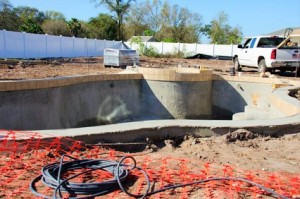
In March, more than 1,600 new swimming pools with a total value of approximately $67M were started in the Sunshine State.       

FL New Pool Permits by Area – March 2017

While March didn’t prove to be a record month for new swimming pool construction in Florida, new construction activity has been holding somewhat steady since the start of the year.  Out of the 1,608 new permits with a construction value of approximately $67M added to the HBW database last month, the southwest area maintained its lead.

In the southwest region, there were 465 new swimming pools started last month with a total value in excess of $19M.  Lee County led both the southwest and entire state of Florida for having the highest concentration of new pool construction for the one-month period, a pattern that has been set since the start of the year.  With 142 new permits and more than $6M in construction value, Lee County continues to set the pace for pool starts.  The pool builders leading construction in the southwest portion of the state include Aragon Pools & Spas with 56 new permits and Pinnacle USA and Aquadoc Inc. with 23 and 22 new permits on file respectively.

The Orlando area continued to hold ranking as the second hottest place for new pool construction.  In March, Orlando had 344 pool starts and just about $14.6M in construction value.  The larger county of Orange pushed up one spot since February ranking second in the state for pool starts; with a minute increase since February, Orange County had 121 new swimming pool permits and nearly $6.7M in construction value last month.  All Seasons took the top spot out of builders in the area with nearly 90 starts on file and close to $3M in total value.  Holland Pools and Bobs Pool Service Inc. were next to follow with 26 pool starts each.

Tampa and Southeast Florida each had 309 new swimming pool permits added to the HBW database last month.  Tampa had a greater total construction value of approximately $13.7M, while the southeast region had a lower total value of $11.5M and the lowest average value of construction statewide at $37,262.  In Tampa, Hillsborough County had the highest concentration of pool starts with 107 new permits and a total value close to $5.4M, while Palm Beach County carried the highest concentration of new pool construction activity in the southeast with 113 new permits and a total value in excess of $4.7M.  Pool builders leading the areas include Tampa Bay Pools in Tampa (23 permits) and Louden Bonded Pools (17 permits) in the southeast.

While Jacksonville remained at the bottom of the spectrum for total swimming pool starts (181 permits), it pushed up to the top position for average value of construction (average value: $44,401) in Florida.  Nearly 30% of the $8M in new pool construction occurring in Jacksonville last month took place in St. Johns County.  There were more than 60 pool starts with a total value in excess of $2.8M in St. Johns.  Top builders for total starts in the area include Surfside Pools & Spas (12 permits), Blue Haven Pools (11 permits) and Stanley Pools (8 permits).

FL Top 5 Counties for New Pool Permits – March 2017

FL Average Value of New Pool Construction – March 2017

Information utilized for the graphs and above listed figures for swimming pool construction in Florida was directly derived from HBW construction data reports. To gain access to the HBW database and receive custom and detailed reports on the latest residential and commercial building activity in Florida, Georgia, Texas, Alabama, and Oklahoma, please contact HBW for details.
Earth Day Special – Going Solar in the U.S.

With Earth Day just around the corner (April 22, 2017), it is a great time to look at earth-friendly efforts and solar statistics throughout the U.S.

Sustainability – It is a word often used and a concept that is becoming increasingly more important in the construction industry.  From solar and earth-friendly materials to energy, recycling and waste management, there is a lot of growing room for construction businesses to integrate green and sustainable materials and practices into their daily operations.

Last year around this time, we explored 10 Ways to a More Sustainable Home.  Today, we recognize Earth Day (April 22nd) and the efforts that are already in place and making headway in solar throughout the U.S.  Which states are leading solar capacity?  Which businesses are installing solar on their buildings?  Here’s a look at the latest statistics offered by the Solar Energy Industries Association on solar capacity in 2016:

Solar has been taking off from the start, and it is only getting better.  Along with solar becoming more affordable, installation of solar panels has been up year-over-year. According to the Solar Energy Industries Association (SEIA), in 2016 14,800 megawatts of solar PV (to reach 42.4 gigawatts capacity) was installed in the U.S.; this is enough to power 8.3 million homes!  Moreover, the solar industry is on track to nearly triple in size by 2022. (source: SEIA.org)

When comparing states, not surprisingly California is on top in ranking based on the cumulative amount of solar electric capacity installed last year.  The Golden State really shines (pun intended) in the solar market, as it is ahead by leaps and bounds over other areas in the U.S.  In 2016, California led in the number of solar jobs added (>100k) and capacity installed (18.3k MW = 4.7M+ homes), leaving a massive gap between first and second ranking states.  Positioned in second for solar capacity installations is North Carolina.  With just over 3k MW of cumulative capacity and a homes powered equivalent of 341k, North Carolina is making its presence known in the solar industry.  Arizona came in a close third with nearly 3k MW of cumulative capacity and a homes powered equivalent of approximately 446k homes.

Major corporations are also jumping on the solar train.  Last year, nearly 1,100 MW of capacity installed could be accounted for at 2,000 corporate solar user locations.  As of 2016, the amount of solar installed by top U.S. corporations is enough to power 193,000 homes.  By now most of us have heard of IKEA’s commitment to solar power (91% of stores powered by solar), but did you know that Target ranked #1 for corporate solar users last year?  That’s right, Target was on top with 147.5 MW.  And Walmart, with its solar-powered stores being visited by 7.3 million people each week, ranked second with 145 MW.  The corporate leader that came in third was not a superstore retailer; rather, it is a San Francisco based industrial real estate and warehouse logistics management company.  While not a household name, Prologis is attracting attention for its solar capacity in the corporate world by having nearly 108 MW on record.  Rounding the top five list for last year are Apple (~94 MW) and Costco (50.7 MW).

While the above listed top five corporations for solar made a mark in 2016, other companies are making plans to integrate solar energy into their operations in the coming years.  For example, Amazon.com was recently reported by The Seattle Times to have plans for solar panel installation in 15 U.S. fulfillment centers by the end of this year.  Additionally, the e-commerce behemoth expects to have 50 facilities (including international) partially powered by solar within the next three years.

While solar is just one part of the sustainability puzzle, it is an important part of our growing industry.  As a construction professional, if you haven’t already encountered the demand for and use of solar, you will very soon.  In addition to consumers having greater access to information about solar energy and its benefits, the construction industry is becoming more aware of ways to incorporate sustainable practices and products into projects and business.

For more information on construction business and marketing tips, stay connected with the HBW Blog.  To get ahead of construction activity and gain access to the latest permitting data in Florida, Texas, Georgia, Alabama and Oklahoma, contact HBW for more information on construction data reports and industry leads.

*Solar statistics listed above were gathered from findings and reports published by SEIA.org, unless noted otherwise.

Bringing Your Videos to the Next Level

Home builders have many tools available to them for construction projects, but they may not be aware of the many tools available to them for video marketing.  Although most contractors are not interested or have time to produce quality videos for marketing, some smaller businesses are forced to learn as they go as demand for dynamic video content increases.  According to YouTube, the site has over a billion users, which represents nearly 1/3 of all Internet activity.  Additionally, hundreds of millions of hours of YouTube videos are watched each day, generating billions of views.

Such attention-grabbing statistics make it impossible to deny the power and popularity of video.  While it is important to integrate video into your marketing efforts, often there simply isn’t room in the budget for a dedicated marketing manager; luckily, there are tools to help the budget-conscious spice up their videos and make them more engaging, even on-the-go.

So before you pick up your phone to create and post a typical and predictable video of a job site or event, check out some easy-to-use apps that may be useful in kicking your video up one notch closer to professional:

  1. iMovie (iOS) – Let’s start with the easy one first.  The iMovie app is already front, center and preloaded for iPhone users.  While the app won’t make you the next Martin Scorsese, it will allow you to quickly trim and perform very basic edits of your video clips before sharing.
  2. Boomerang – Introduced by Instagram in 2015, Boomerang became quite popular for creating gifs that get noticed. While you wouldn’t use this app for full coverage videos, it can be great for sharing a ta-da moment from a finalized project, company event or sneak peek of a new product or service line.  It shoots 10 quick shots and instantly turns it into a looping gif-style clip.
  3. Adobe Premiere Clip – Now just because it is made by Adobe doesn’t mean that it’s for experts only. Adobe is known for its professional-grade programs for artists and illustrators, but this app requires no previous technical expertise while offering features that may certainly make you feel a bit more professional.  It’s somewhat of a “gateway” to their more robust and related programs, and it includes enough features to bring your video to the next level.  The in-app features include: cropping/trimming; speed adjustment; text and titles; music; lighting adjustments; and, of course, the ability to transition it to some of the other Adobe programs.
  4. Videorama – If you are looking for special effects that you can’t get with most video editors, you may want to check out Videorama. Depending on your objectives for the video, you can go as mainstream as just clean clips, text and music or as unexpected as special visual and sound effects that can completely change the look and feel of your video.  The ability to overlay images and the options for filters and adjustments make it unique and fun to use.
  5. Spark – Looking to do a little more storytelling and less time behind the video camera? Then this app will give you a little “spark”. Another app created by Adobe, Spark is a story teller, allowing the user to combine images, videos, text, music and voice.  It is very easy to use and offers a unique approach for telling your own business story, highlighting a charity project or launching a new service.

While video is just one part of the marketing pie, it is one of the easiest ways to gain your audience’s attention quickly and effectively.  Take advantage of the many tools available to help you build videos and stories so that you can focus on building your client portfolio and their homes.

For more information on construction business and marketing tips, stay connected with the HBW Blog.  To get ahead of construction activity and gain access to the latest permitting data in Florida, Texas, Georgia, Alabama and Oklahoma, contact HBW for more information on construction data reports and industry leads.

 * HBW does not endorse or guarantee the above listed services.  Programs/Applications were chosen based on ease of use and access, as well as applicability to construction professionals.

It’s All About the Partnerships

How to develop a partnership between home builders and manufacturers that benefits your business.

In business, it takes a village… Beyond your employees and customers, strong partnerships with key manufacturers open the door to a multitude of possibilities.  From exclusive products to rebates, manufacturers and contractors have a symbiotic relationship that requires trust, guidelines and the ability to maximize opportunity from both sides.

Just as there is competition between home builders, there is a tight market for manufacturers; the many unscheduled “check-ins” and seemingly random calls builders receive each week from manufacturer’s reps should be evidence enough to know that many companies are looking to make your business part of their business.  And while such interruptions can cause more inconvenience than interest, what seems like constant bombardment isn’t all bad.  Both contractors and manufacturers have similar goals in common, and they can and should work together to build a strong understanding for expectations and customer base.  By working together, as partners, both parties are enabled to provide the greatest value to customers at the lowest cost possible.

Additionally, as a home builder, there are various direct incentives and rewards that can be reaped from partnering with a manufacturer.  Some examples include:

  • Manufacturer rebates
  • Early access or exclusive access to specialty products
  • Exclusive rights to installation
  • Warranties and the ability to negotiate terms
  • Lines of credit and flexibility

While incentives can be reason enough for a home builder to jump into a partnership with a manufacturer, don’t make the leap just yet.  Like any good relationship, a proper partnership takes time, understanding and commitment.  You should take the time to ask questions and draw a clear map for expectations.  Being transparent with each other can build a sense of security that is needed to be confident in pricing, availability, timely delivery and quality of products.  Choosing a manufacturer shouldn’t be based on the squeakiest wheel or who is currently on your payables either.  Consider them part of your team and conduct the “interview” that you need to get the important questions answered.  When deciding on the right manufacturer for partnering with your company, consider the following:

  1. Product – Is the product and cost the right fit for your customer base? What are your primary services, and how does this product fit into your customers’ needs and budget?
  2. Know Your Value – What do you bring to the table in the partnership? What benefits can you offer as a builder, whether it be reaching a niche market or having concentration in a geographic area of interest?
  3. Define Your Terms – Just like any negotiation, you will need to allow for some give and take, but have a clear idea of what you want and need as a starting point and work with your choice manufacturer to find a fair balance.

Partnerships require commitment, from both sides, so it is important to take time in making your decision.  Along with making sure the products are a good fit for your business, work to get to know each other, expectations for terms, outcomes and management.  By taking the proper steps in choosing a manufacturer, you will find the “right” partner rather than the partner for right now.

For more information on construction business and marketing tips, stay connected with the HBW Blog.  To get ahead of construction activity and gain access to the latest permitting data in Florida, Texas, Georgia, Alabama and Oklahoma, contact HBW for more information on construction data reports and industry leads.

Tampa Maintains Lead in Florida Residential Construction – March 2017

HBW Report: A monthly overview of Florida’s new residential construction permitting activity in March 2017.

Out of the more than 4,600 new residential construction permits on file with HBW last month, Tampa came out on top with close to 1,200 housing starts.  During that same period, CNBC reported on Tampa’s impressive housing market as it currently holds the title of the “healthiest housing market in the U.S” (report based on inventory, construction and unemployment rates). The CNBC article, which referenced the latest housing market report conducted by TenX also noted that Florida has been recovering nicely from an economic standpoint; here’s a closer look at residential construction activity (by region) across the Sunshine State last month:

Florida Total Resid. Permits – March 2017

Tampa

In addition to being referred to as the healthiest housing market in the US, Tampa had its best month since the start of the year during March.  Although the area’s increase in housing starts was not much higher than February, the new residential construction activity has been increasing month-over-month.  Out of the 1,194 housing starts in March, the County of Hillsborough saw the greatest concentration of starts, both in Tampa and across the state.  With 464 housing starts for the one-month period, Hillsborough County experienced just over a 15% month-over-month increase in new residential construction.  When looking at local builders, Lennar Homes took center-stage for activity, having approximately 165 new permits last month.  The average value of new construction in Tampa ranked third highest at $262,442.

Southwest

The southwestern portion of Florida was also bustling with new residential construction last month, ranking second highest across the state.  Out of the more than 1,000 housing starts, the largest amount of new construction took place in Lee County (287 permits), while the least amount was in Charlotte County (72 permits).  And while Lee County made the Top 5 List for housing starts statewide, Sarasota and Manatee counties held their own having a healthy level of new construction with 220 housing starts in each county.  Out of home builders in the area, Lennar Homes had the most starts (95 permits) on file for the month.  The average value of new residential construction in Southwest Florida ranked fourth out of five regions at $254,039.

Orlando

Orlando was our focus in January as it had top position for new residential construction at the start of the year.  While Orlando didn’t hold the lead in March, it certainly continues to flourish as there were 960 housing starts on file for the month.  Additionally, Orlando’s incremental growth in construction value since the start of the year resulted in it surpassing Southeast Florida for the month, as it held the highest average value of residential construction statewide at $302,306.  D.R. Horton and Lennar Homes led local builders for starts having 126 new permits and 122 new permits on file respectively.

Jacksonville

Tampa wasn’t the only Florida city to make the previously mentioned top healthiest cities list.  Jacksonville also made the top five based on the TenX report, and residential construction in the area has been climbing every month since the start of the year.  In March, there were more than 775 housing starts on file for Jacksonville, reflecting approximately a 4% month-over-month increase.  D.R. Horton had a strong hold on housing starts with 160 new permits for the month, and overall, the average value of construction in the area remained the lowest in the state at $234,101.

Southeast

While the average value of construction dropped in the southeast last month to $278,391, the area experienced a month-over-month increase of more than 10% in housing starts resulting in 667 new permits added to the HBW database. The southeast has seen an increase in residential construction every month since January, and the county holding the greatest concentration of housing starts last month was Miami-Dade (214 permits).  Just as in Tampa and the southwest, Lennar Homes took top spot in the southeast with 129 housing starts for the month.

Florida Top 5 Counties for Total Resid. Permits – March 2017

Florida Average Value of Resid. Construction – March 2017

Information utilized for the graphs and above listed figures for Florida residential construction was directly derived from HBW construction data reports. To gain access to the HBW database and receive custom and detailed reports on the latest residential and commercial building activity in Florida, Georgia, Texas, Alabama, and Oklahoma, please contact HBW for details.

Safety Update: OSHA Launches Safe + Sound Week

Looking to demonstrate your company’s commitment to safety?  Then you may want to participate in OSHA’s first-ever “Safe and Sound” Week.

While it should come as no surprise that the construction industry is one of the highest risk industries in the nation, the truth is that fatalities and injury rates in private construction far outpace the U.S. average across all industries. According to the Bureau of Labor Statistics, there were approximately 2.9 million nonfatal workplace injuries and illnesses reported by private industry employers in 2015, with the percentage of nonfatal private sector construction injuries occurring at a rate of 3.5 per 100 workers.  Fatalities in the private construction industry rose approximately 4% between 2014 and 2015, which reinforces the fact there is much room for improvement in safety programs in the construction industry.

The old proverb stating that “an ounce of prevention is worth a pound of cure” goes a long way when referring to safety programs.  Being proactive is key to strengthening jobsite safety; insecure jobsites put your workers and your business in harm’s way, which can negatively impact your company’s reputation and bottom line.  By taking part in OSHA’s Safe + Sound Week, your company can commit to reviewing your current safety policies, making additions and/or revisions, or creating new policies that may be missing.

While there are a number of safety policies, programs and educational tools that you can implement, OSHA has stated that all effective programs share the following three core elements:

  1. Management Leadership – Lead managers commit to establishing a safety program, along with performing regular maintenance and improvements as necessary.
  2. Worker Participation – An ideal safety program will include input from workers, encouraging them to identify solutions to ongoing or current safety issues. By improving worker engagement and communication, crews can have higher levels of job satisfaction and be more productive on the job.
  3. Systematic “Find and Fix” Approach – Employers should work with their employees and workers to make a habit of regularly reviewing the workplace for hazards. By creating a system or routine practice for identifying potential hazards, they can be addressed before they become the cause of injury.

OSHA stresses the fact that safety programs do not need to be complicated, nor should they require expensive consultants or outside services to be developed.  On the contrary, OSHA encourages a “Do-It-Yourself” approach and offers recommended practices for safety and health programs in construction (published October 2016), employer tools, case studies and other downloadable guides.

In addition to preserving life, safety programs improve compliance with laws and regulations, reduce costs associated with workers’ compensation, engage employees and increase productivity.  To refresh your team’s awareness of the importance of your safety policies, you may choose to participate in OSHA’s Safe + Sound Week.  OSHA invites businesses of any size and industry to participate, and they provide flyers and tools to share with your clients and the public to demonstrate your commitment to safety.  To learn more and sign up to receive updates regarding the campaign, visit OSHA’s Safe + Sound Week webpage.

To get the latest on industry updates, business and marketing tips, stay connected with the HBW Blog.  If you would like to get ahead of construction activity and gain access to the latest permitting data in Florida, Texas, Georgia, Alabama and Oklahoma, contact HBW for more information on construction data reports and industry leads.

Save the Date: Industry Conventions and Expos

A list of upcoming conventions and expos designed for construction professionals.

Every quarter or so, we take time to review our calendars for upcoming industry events that may be of interest to our readers.  Although exhibiting in expos requires quite a bit of extra planning (and resources), attending conventions and shows can be an easy undertaking, especially if they take place nearby.  Here is a list of several upcoming conventions and expos (in chronological order) that are geared to the construction industry:

AIA Expo – Conference on Architecture

When: April 27-29, 2017

Where: Orange County Convention Center – Orlando, FL

AIA Convention 2017 is a major architecture and design event featuring an expected 800 exhibitors representing software and technology, energy efficiency, building systems, finishes, lighting, stone and tile, restoration and more.

Education:  There will be 500+ session including workshops, seminars, tours and expo credit.

For more information on the AIA Expo 2017 and online registration, visit the event website.


East Coast Builders Conference (ECBC 2017)

When: May 4-5, 2017

Where: Cobb Galleria Centre – Atlanta, GA

This event is geared toward the East Coast residential construction industry.  Exhibiting products include: appliances, building materials and equipment, business services, doors and windows, kitchens and countertops, electronics, lighting, flooring, roofing, siding, technology and more.

Education: A variety of educational tracks will be offered in areas including building, remodeling, design, and management. Topics range from industry technology and law to marketing and business, with the ability to earn all CU’s for the year in one event.

For more information, visit ECBC website.


Build Expo – Atlanta, GA

When: July 12-13, 2017

Where: Georgia World Congress Center

Exhibit times: 10:00am-3:00pm daily

Education: Seminars are offered with categories including sales and marketing, green building, construction law, business management and AIA accredited sessions.  All educational sessions are complimentary and seating is limited.

For more information on the Atlanta Expo, as well as those in Houston (August 16-17, 2017) and Dallas, visit the Build Expo website.


Sunbelt Builders Show

When: August 2-3, 2017

Where: Hilton Anatole – Dallas, TX

The Sunbelt Builders shows draws thousands of residential construction industry professionals from all over the U.S.  With more than 200 exhibitors and thousands of attendees, leaders from multi-family building, remodeling, land development, finance and management are expected to participate in the event.

Education: Each day offers several different educational sessions and seminars.  Topics include marketing and sales, design trends, energy code solutions, taxes and auditing.

For more information, visit the Sunbelt Builders Show website.


ICUEE 2017 The Demo Expo – The International Construction & Utility Equipment Exposition

When: October 3-5, 2017

Where: Kentucky Exposition Center – Louisville, KY

The International Construction and Utility Equipment Exposition (ICUEE) is also known as The Demo Expo.  Held every two years, the event is designed to address the needs of utility professionals and construction contractors in the areas of electric, sewer/water, telecommunications/cable, and natural gas. With over 950 manufacturers on display, attendees can test-drive the latest equipment, watch live demonstrations of new products and technologies, and take advantage of offerings in industry education.

For more information about the expo, visit the ICUEE website.


 Greenbuild International Conference & Expo

When: November 8-10, 2017 (Expo: 11/08-11/09   Conference: 11/08-11/10)

Where: Boston Convention & Exhibition Center – Boston, MA

Greenbuild is the world’s largest conference and expo dedicated to green building.  Thousands of construction professionals from all over the world and varying sectors of the industry join together for three days of educational sessions, networking, showcases and LEED workshops.  In 2016, more than 18,000 people attended the event, with the majority of attendees representing architecture/engineering/design firms, contractors and builders, consultants and educators.

To learn more about exhibiting and/or attending Greenbuild, visit the event website.

While the above listed events do not begin to cover all of the industry events and expos that will be happening this year, they are a good place to start if planning to get more involved in the construction industry and community.  Whether attending an educational session or simply looking for the latest tools and technologies on display, it is worth adding an event or two to your calendar to stay fresh and inspired.

For quick tips on making the most of trade shows, check out the previous post Mark Your Calendars for Trade ShowsFor more information on construction business and marketing tips, stay connected with the HBW Blog.  To get ahead of construction activity and gain access to the latest permitting data in Florida, Texas, Georgia, Alabama and Oklahoma, contact HBW for more information on construction data reports and industry leads.

Hot Spots for Florida Swimming Pools in February

Last month, a few areas of Florida were booming when it came to swimming pool starts.  Here’s a monthly view of the hot spots for new swimming pools in Florida.

Out of the 1,730 new swimming pool permits and $75M in construction value on file for Florida last month, HBW is honing in on the hottest spots for new pool construction.  Overall, new pool construction is off to a slow but steady climb since the start of the year as the Sunshine State inched up in new pool permits by 3% since January.  Although Orlando took the spotlight in January, the southwest region of Florida was the one to shine in February.  Having experienced a month-over-month increase of 18%, new swimming pool construction is heating up SW Florida, especially in the counties of Lee and Collier.  In February alone, there were nearly 520 pool starts in the area and approximately $22.5M in total value.

While Orlando did not reach the same level of activity as January, it still ranked second highest out of the five major regions (Southwest, Southeast, Tampa, Orlando, Jacksonville) reviewed.  Out of the 362 pool starts and more than $15.2M of construction value in Orlando, the centrally-located county of Orange had the highest concentration of new permits (118 permits) and ranked third-highest statewide.

Other areas that spiked last month include Tampa and Jacksonville.  Although ranked third highest for total swimming pool starts (336 permits, total value: $15.2M), the Tampa area had a 21% month-over-month increase, and its larger county of Hillsborough ranked fourth highest in the state for total starts.  And while Jacksonville had the lowest amount of new construction, it is showing improvement since the start of the year.  With a 17% increase in pool starts, Jacksonville had 187 permits and approximately $8.4M in construction value added to the HBW database last month.

FL Total Pool Permits by Area – Feb. 2017

While new swimming pool construction has been steadily increasing since the start of the year, the average value of construction has been somewhat consistent with some fluctuations in certain areas.  Statewide, the average value of construction has remained in the $40k-$48k range since the start of the year.  Since January, Tampa and the southeast have experienced the most fluctuation in average value… Tampa’s 16% month-over-month increase resulted in an average value just over $45k, while the southeast’s 11% month-over-month decrease in average value landed it at $40.6k in February.

FL Average Value of Swimming Pool Construction – Feb. 2017

Finally, to the good stuff – the hot spots.  As previously mentioned, the southwest region was in the lead last month for total pool starts.  For this reason, it should come as no surprise that the southwest counties of Lee and Collier are ranked #1 and #2 for total new construction activity.  Lee County has been at the top since the start of the year, and it remains consistent in starts each month with 154 new permits and just about $7.2M in construction value in February.   While Collier County did not make the top five in January, it ranked second highest last month with 120 pool starts and just over $5M in total value.  Coming in a close third, Orange County in Orlando had 118 new pool permits and a total value in excess of $5.2M.  Hillsborough County (Tampa) and Miami-Dade (Southeast) closed the top five with 117 permits and 108 permits respectively.

FL Top 5 Counties for Total Permits – Feb. 2017

Information utilized for the graphs and above listed figures for swimming pool construction in Florida was directly derived from HBW construction data reports. To gain access to the HBW database and receive custom and detailed reports on the latest residential and commercial building activity in Florida, Georgia, Texas, Alabama, and Oklahoma, please contact HBW for details.