
Texas New Swimming Pool Construction – December 2025

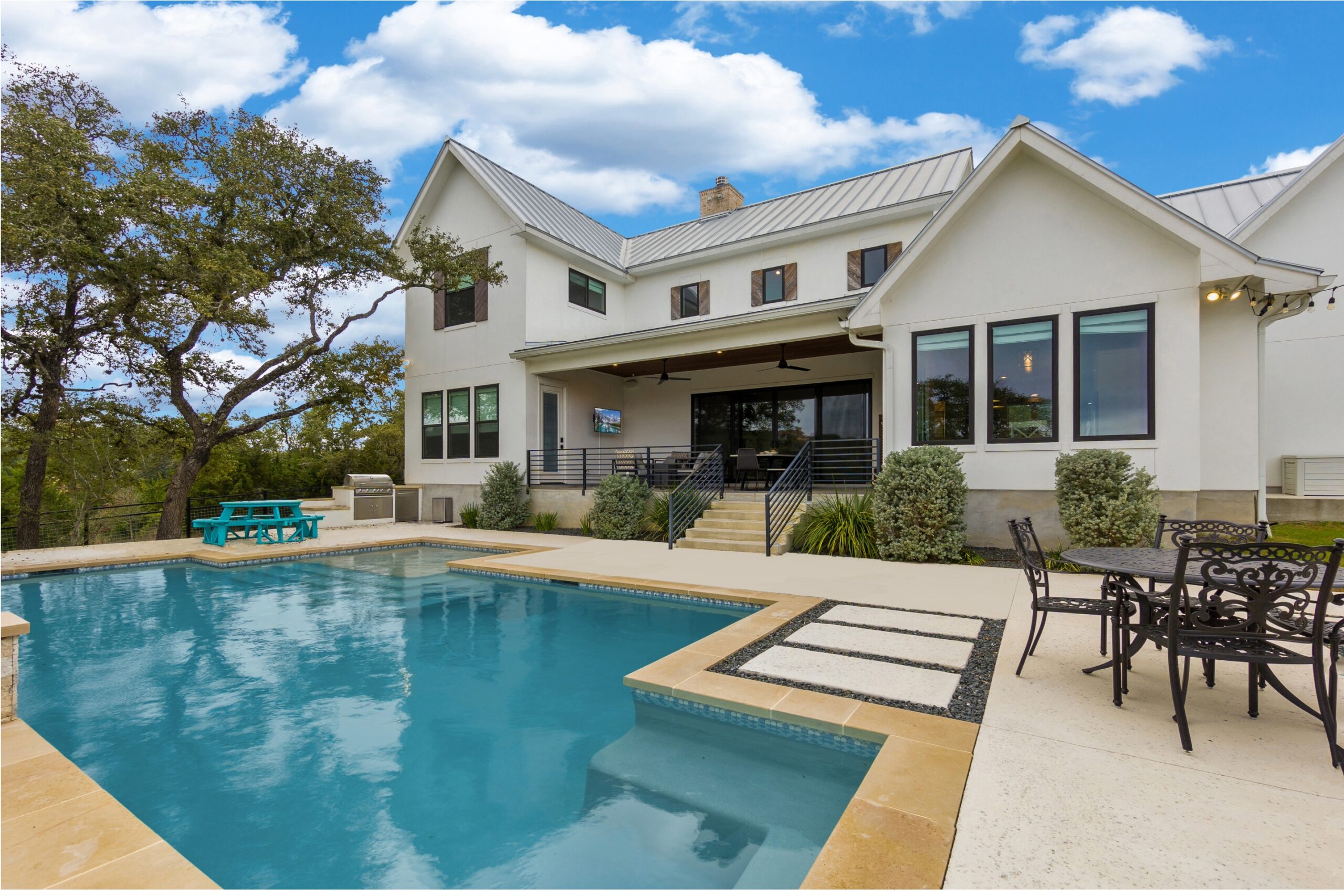
New swimming pool construction activity across Texas exhibited a moderate seasonal contraction in December 2025, reflecting both typical year-end deceleration and broader market recalibration within residential construction. According to HBW’s latest construction data reports, a total of 451 new swimming pool permits were recorded across the four primary metropolitan markets of Texas (Dallas–Fort Worth, Houston, Austin, and San Antonio) during the month of December.

When compared to November 2025, which posted 487 permits, December activity declined by 36 permits, representing approximately a 7 percent month-over-month decrease. While the contraction is notable, it remains consistent with historical winter slowdowns, particularly for discretionary residential improvements such as swimming pools.

Collectively, the four metros accounted for $33.23 million in total construction value, providing valuable insight into regional demand, pricing dynamics, and contractor opportunity as firms prepare for the 2026 construction cycle.

Here is a closer look at the monthly activity by region for December 2025:

Dallas

The Dallas area remained the most active swimming pool construction market in Texas during December 2025.

  • Total Permits: 230
  • Total Construction Value: $17,800,831
  • Average Permit Value: $77,395

Dallas County led regional activity with 62 permits, followed closely by Tarrant County with 57 permits, together accounting for more than half of the metro’s total volume. Elevated average valuations suggest continued demand for higher-end residential pool installations, reinforcing the region’s role as a premium market for custom pool builders and specialty trades.

Houston

Houston recorded the second-highest volume of new swimming pool permits for the month.

  • Total Permits: 100
  • Total Construction Value: $8,264,982
  • Average Permit Value: $82,650

Harris County, with 62 permits, dominated regional activity, and the Houston area posted the highest average valuation among the four metros reviewed. The data indicates sustained homeowner investment in larger or more complex pool projects, likely influenced by lot size availability and Houston’s extended warm-weather season.

Austin

Austin continued to demonstrate steady, though more moderate, pool construction activity.

  • Total Permits: 78
  • Total Construction Value: $4,912,399
  • Average Permit Value: $62,979

Travis County accounted for 64 permits, representing a substantial share of the metro’s activity. While average project values fell behind those of Dallas and Houston, the consistent permit volume reflects resilient demand in Central Texas, particularly within established residential submarkets.

San Antonio

San Antonio posted both the lowest overall permit volume and average construction value among the four metros, though activity remained concentrated.

  • Total Permits: 43
  • Total Construction Value: $2,254,000
  • Average Permit Value: $52,419

Bexar County, with 33 permits, served as the primary driver of new pool construction. Lower average valuations suggest a market skewed toward entry-level or mid-range residential installations, presenting opportunities for volume-driven contractors and cost-efficient construction models.

Overall, the 7 percent month-over-month decline from November to December should be interpreted within the context of seasonal construction cycles rather than as a signal of structural weakness. Despite reduced permit volume, total construction value remained robust, particularly in Dallas and Houston, indicating sustained consumer willingness to invest in outdoor residential amenities.

For construction industry professionals, the above listed data points emphasize the importance of:

  • Targeting high-value submarkets where average permit valuations remain elevated
  • Aligning labor and material procurement strategies ahead of anticipated spring demand
  • Monitoring county-level permit concentrations to refine geographic expansion and sales efforts

As we start 2026, swimming pool construction remains a resilient niche within residential construction, supported by population growth, climate considerations, and homeowner preference for lifestyle-oriented investments.

To gain more information on the builders, homeowners and permits for the construction activity above, check out HBW for your copy of the latest construction data reports. To gain access to the HBW database and receive custom and detailed reports on the latest residential and commercial building activity in Florida, Georgia, Texas, Alabama, and Oklahoma, please contact HBW for details.
Florida Residential Construction in 2025: A Market Reset

Insights from HBW’s Building Activity Trend Report (Totals through Q4 2025)

Florida’s residential construction market ended 2025 on a quieter note. According to HBW’s Building Activity Trend Report, new residential permitting across the state declined approximately 4% year over year, totaling 100,945 new permits for the year, compared to 105,583 in 2024.

At first glance, a decline may be concerning, but context matters. When viewed over the past several years, 2025 looks less like a slowdown and more like a market finding its balance as Florida’s construction market has been adjusting for several years:

  • 2022: 5% decrease versus 2021
  • 2023: 14% decrease versus 2022
  • 2024: Flat, signaling stabilization
  • 2025: 4% decrease

After the sharp correction in 2023 and a leveling-off in 2024, this year’s modest dip suggests recalibration rather than retreat. This may be indicative of builders proceeding with greater discipline, and projects becoming more targeted by geography, price point, and buyer profile.

For the purpose of this trend report, HBW tracked activity across six major regions in Florida. While most regions showed some degree of decline, the data reveals clear pockets of strength.

  • West Florida: 26,427 permits (+20% YoY)
  • Southwest Florida: 23,128 permits (–6% YoY)
  • Northeast Florida: 15,947 permits (–26% YoY)
  • Central Florida: 14,843 permits (+2% YoY)
  • Northwest Florida: 11,408 permits (–7% YoY)
  • Southeast Florida: 9,192 permits (–10% YoY)

It is easy to see that the headline here is West Florida. Not only did the region lead the state in total volume, but it reversed course after several years of decline.

West Florida: The Standout Story of 2025

West Florida’s 20% year-over-year increase is particularly notable given its recent history:

  • 2022: –4%
  • 2023: –12%
  • 2024: –12%
  • 2025: +20%

Even more compelling, six of the seven counties in the region reflected annual gains, and those counties included the following:

  • Pasco County: 6,938 permits (+105% YoY)
  • Hillsborough County: 4,332 permits (+9% YoY)
  • Sumter County: 4,158 permits (+18% YoY)
  • Hernando County: 1,726 permits (+73% YoY)
  • Citrus County: 1,621 (+31% YoY)
  • Pinellas County: 690 permits (+39% YoY)

It is worth noting that while Polk County carried a higher volume of new permits (6,962 permits), it is the only county that reflected a decline (-16% YoY). The takeaway? West Florida appears to have moved from correction to recovery, supported by continued population growth, suburban demand, and improving builder confidence.

Southwest Florida: Still a Volume Leader

With 23,128 new permits, Southwest Florida ranked second statewide in total activity. The counties with the greatest concentration of new construction included:

  • Lee County: 8,774 permits (–5% YoY) — the highest-volume county statewide
  • Manatee County: 5,762 permits (+5% YoY)
  • Sarasota County: 3,654 permits (-14% YoY)

While overall activity across the region dipped slightly (-6% YoY), Southwest Florida remains a core growth engine for residential construction, particularly for master-planned communities and move-up buyers.

Central Florida: Early Signs of a Rebound

Last year, Central Florida recorded 14,843 permits which is somewhat in line with the previous year. While such limited movement may appear less than noteworthy, it is important to recognize that it follows a 6% decline last year and a 14% drop the year before, making this year’s steadiness meaningful.

Counties with higher levels of new construction activity include:

  • Brevard County: 3,441 permits (–3% YoY)
  • Lake County: 3,206 permits (+3% YoY)
  • Orange County: 3,054 permits (-7% YoY)
  • Osceola County: 2,431 permits (+15% YoY)

The above listed figures suggest that Central Florida may be stabilizing after several less favorable years.

Northeast Florida: High Volume, Slower Pace

Northeast Florida logged 15,947 permits in 2025 but experienced the state’s largest regional decline (–26% YoY).

Activity was concentrated in a few counties:

  • Marion County: 4,823 permits (–23% YoY)
  • Duval County: 3,835 permits (–21% YoY)
  • St. Johns County: 3,332 permits (–33% YoY)

Rather than a collapse, the data points to a pause as developers recalibrate after a previous year (2024) of strong growth.

Northwest Florida: Varied Across Counties

Northwest Florida posted 11,408 permits, down 7% year over year. It is worth noting that the Northwest region includes 18 counties in total, two of which are bordering counties in Alabama. The bordering counties are included to reflect the broader regional construction market and cross-border development patterns that influence activity in Florida’s Panhandle. Despite the overall decline across the region, there were several counties that showed positive momentum:

  • Bay County: 2,162 permits (+8% YoY)
  • Santa Rosa County: 1,915 permits (+5% YoY)
  • Baldwin County, AL: 1,865 permits (+9% YoY)

Others worked through pullbacks:

  • Walton County: 1,163 permits (–17% YoY)
  • Escambia County: 1,062 permits (–24% YoY)

Southeast Florida: Selective Strength

Southeast Florida recorded 9,192 new residential construction permits in 2025, reflecting approximately a 10% year-over-year decline. While the region had less permits compared to others, activity remained concentrated in several high-volume counties that continue to shape the market’s direction.

  • St. Lucie County: 2,844 permits (–21% YoY)
  • Palm Beach County: 2,057 permits (–8% YoY)
  • Miami-Dade County: 1,918 permits (+28% YoY)

The divergence among counties is notable. Declines in St. Lucie and Palm Beach point to continued affordability pressures and more measured development pacing, while Miami-Dade’s significant increase underscores ongoing demand for urban, infill, and higher-density residential projects.

Higher-Value Homes: Where Momentum Is Building

With most annual reports, I like to take a moment to review some of the higher value construction figures as they can be telling of where high-end development may be on the rise, or decline. One of the clearest bright spots in 2025 was higher-value residential construction, which is defined as homes valued over $500,000.

  • West Florida: 3,532 permits (up from 2,276 in 2024)
  • Central Florida: 2,540 permits (up from 2,295)
  • Southwest Florida: 2,496 permits (up from 2,095)

While overall permit counts moderated, builders leaned into higher-margin projects, signaling confidence in affluent buyers and long-term demand in certain regions.

The latest residential construction data for Florida during 2025 tells a clear story… The market is not chasing volume at all costs. Instead, it is becoming more selective, more regional, and more value-driven. For contractors, suppliers, and service providers, opportunity remains strong, but ultimately success will depend on understanding where growth is happening, what types of homes are being built, and how buyer preferences are evolving. In short, Florida isn’t building less because demand disappeared. It could simply be that it is building smarter, and for those positioned in the right regions and price points, the year ahead still offers plenty of runway.

To gain more information on the builders, homeowners and permits for the construction activity above, check out HBW for your copy of the latest construction data reports. To gain access to the HBW database and receive custom and detailed reports on the latest residential and commercial building activity in Florida, Georgia, Texas, Alabama, and Oklahoma, please contact HBW for details.
Florida’s Top Home Builders: December 2025 Market Snapshot

Florida closed out 2025 with strong residential construction activity, underscoring the state’s continued role as one of the most dynamic homebuilding markets in the country. According to construction data reports compiled by HBW, a total of 5,435 new residential construction permits were added to the Florida database during December 2025 alone. Activity was heavily concentrated in the Southwest region (1,758 permits) and the Tampa market (1,455 permits), together accounting for more than half of all new residential permitting statewide.

The following analysis highlights the top five home builders by permit volume across Florida’s five major regions (Southwest, Tampa, Orlando, Southeast, and Jacksonville) and examines not only scale and market presence, but also construction value metrics, regional insight, and emerging strategic patterns within the industry.

It is important to note that the “top five” designation is defined strictly by permit volume for the month, a methodology that provides valuable real-time insight into who is actively building now, rather than relying solely on annual or historical averages.

Southwest

Out of nearly 340 active builders in Southwest Florida during December, national production builders dominated the top tier by permit count:

  • D.R. Horton and Lennar Homes tied for first with 189 permits each, reflecting their continued emphasis on scale, speed-to-market, and entry- to mid-level product offerings.
  • Pulte Homes followed with 121 permits, while Mattamy Homes and Taylor Morrison each recorded 96 permits.

From a valuation standpoint, Mattamy Homes stands out sharply. Despite tying for fourth in volume, Mattamy posted the highest total construction value ($44.7M) and a notably elevated average value per permit ($465,620)—more than double that of several competitors. This signals a deliberate concentration on higher-end or more complex product types within the region.

By contrast, D.R. Horton (average value: $223,982) and Lennar Homes (average value: $214,479) continue to drive scale through comparatively lower average values, reinforcing their positioning as volume leaders capable of capturing broad demand across price points.

Tampa

The Tampa market, with 220 active builders during December, remains one of Florida’s most competitive and capital-intensive regions:

  • Lennar Homes led decisively with 256 permits, nearly $90 million in construction value, and a solid $351,480 average value.
  • D.R. Horton followed with 179 permits, while The Villages of Lake Sumter maintained a prominent regional presence with 106 permits.
  • Meritage Homes (56 permits) and Pulte Homes (46 permits), though lower in volume, recorded some of the highest average construction values in the region—$422,889 and $483,445 respectively—suggesting a focus on energy-efficient, move-up, or lifestyle-oriented communities.

Tampa’s data illustrates a market where volume and value are not mutually exclusive, and where builders may be segmenting product lines to serve both affordability and premium demand within a dense development environment.

Orlando

In the Orlando area, December activity reflects a highly balanced competitive landscape, with three national builders closely clustered at the top:

  • Pulte Homes led the region with 160 permits and over $57 million in total construction value.
  • D.R. Horton and Lennar Homes followed closely, with 115 and 113 permits, respectively.
  • KB Homes (39 permits) and Mattamy Homes (28 permits) rounded out the top five, each targeting more selective segments of the market.

Average construction values across Orlando’s top builders were relatively consistent—generally in the mid-$300,000 range—suggesting a stable pricing environment and a concentration on primary residential product rather than extremes of affordability.

Southeast

Southeast Florida remains a capital-intensive market characterized by fewer permits but significantly higher average values:

  • Lennar Homes led in volume with 102 permits.
  • GL Building Corporation followed closely with 96 permits but surpassed all peers in total value at nearly $40 million.
  • Smaller-volume builders such as KH East Coastal Florida Homes (18 permits) posted the highest average value per permit ($508,742), highlighting a focus on premium development.

Mattamy Homes (21 permits) and Taylor Morrison (17 permits) also landed within the top five in the region, holding spots on the leaderboard. The southeast has consistently favored fewer, higher-value projects, rewarding builders with expertise in land constraints, regulatory complexity, and upscale buyer demand.

Jacksonville

In the Jacksonville area, last month’s permitting activity reflected a diverse mix of mid-range development:

  • Lennar Homes and D.R. Horton led the region with 107 and 96 permits, respectively.
  • Mattamy Homes (63 permits) and AMH Development (42 permits) demonstrated strong mid-market positioning.
  • Flight Builders, despite posting the lowest average value per permit ($86,000), ranked fifth by volume with 36 permits.

Flight Builders’ lower average value is a direct result of its strategic focus on accessible housing, including single-family homes and townhouses at lower price points, often developed in partnership with housing organizations. Their presence in the top five underscores an important market reality: permit volume alone does not equate to price positioning, and affordability-focused builders can play a meaningful role in regional supply even with lower per-unit values.

Statewide Leaders and Multi-Regional Dominance

A clear pattern emerges when viewing the data as a whole. Lennar Homes and D.R. Horton appear in the top five in nearly all five regions, reinforcing their status as Florida’s dominant statewide builders.

  • Lennar Homes recorded 767 permits statewide, while
  • D.R. Horton followed with 590 permits statewide.

Both mega-builders combined are carrying a significant share (approximately 25%) of Florida’s new residential construction load for the one-month period. Their consistent presence across regions reflects operational scale, land control strategies, and standardized product offerings that translate effectively across diverse submarkets. At the same time, regional players and niche builders—such as GL Building Corporation, The Villages of Lake Sumter, and Flight Builders—demonstrate that local specialization and targeted development models remain highly competitive, particularly when aligned with specific buyer demographics or community needs.

One of the key takeaways from last month’s data is the fluid nature of top-five rankings. Builders may appear consistently month after month, while others surface briefly due to the timing of project releases, land development cycles, or phased community build-outs. For builders, developers, and industry stakeholders, monthly permit analysis provides actionable intelligence:

  • Identifying who is actively building in a specific region
  • Tracking shifts in competitive intensity
  • Understanding how volume leaders compare on valuation and product positioning
  • Anticipating supply dynamics before completions and closings occur

In a market as active as Florida, such quick-view snapshots offer a critical lens into near-term momentum and strategic positioning. Whether evaluating competition, identifying potential partners, or assessing regional opportunity, HBW’s permit data offers a clear, timely view into who is building—and where Florida’s residential market is headed next.

To gain more information on the builders, homeowners and permits for the construction activity above, check out HBW for your copy of the latest construction data reports. To gain access to the HBW database and receive custom and detailed reports on the latest residential and commercial building activity in Florida, Georgia, Texas, Alabama, and Oklahoma, please contact HBW for details.lahoma, please contact HBW for details.

Metro Atlanta – 2025 Swimming Pool Construction Market

The latest Swimming Pool Construction Activity Trend Report from HBW reveals a Metro Atlanta market that may finally be finding its equilibrium. After several consecutive years of contraction, 2025 closed with 2,535 new swimming pool construction permits, representing a modest 2% year‑over‑year decrease. While technically a decline, this shift is far less severe than the downturns recorded in recent years and suggests that the market may be stabilizing.

To put the trend into perspective, here is a look at the declines over the last few years:

  • 2022: ‑8% year‑over‑year
  • 2023: ‑26% year‑over‑year
  • 2024: ‑13% year‑over‑year
  • 2025: ‑2% year‑over‑year

The difference between 2,582 permits in 2024 and 2,535 permits in 2025 is marginal, indicating that demand may be leveling off rather than continuing its previous downward slide.

County‑Level Perspective

Through a closer look at the 24 counties included in HBW’s Metro Atlanta coverage area, a more layered landscape is revealed. Several counties posted meaningful gains, while others continued to cool. The leaders for volume of new permits are as follows:

Fulton County – 494 Permits (+4%)

Fulton led the region in total volume and delivered a 4% increase over 2024. This is a notable shift, as Fulton had mirrored the broader metro decline since 2022. The uptick suggests renewed demand in higher‑value residential corridors and signals potential and early signs of recovery.

Cobb County – 277 Permits (‑11%)

Cobb recorded the second‑highest volume but saw an 11% decline year‑over‑year. This marks a reversal from the 18% increase the county experienced in 2024. The shift may reflect a cooling period following elevated activity, or it may be indicative of tightening consumer budgets in established suburban markets.

Cherokee County – 241 Permits (+11%)

Cherokee continued its upward momentum with an 11% increase, building on a 3% rise in 2024. Two consecutive years of growth point to sustained expansion and a solid consumer draw to outdoor living investments.

Forsyth County – 216 Permits (+14%)

Forsyth posted one of the stronger growth rates in the region at 14% year‑over‑year. This level of performance aligns with ongoing new‑home construction, population growth, and a demographic profile that supports discretionary spending on premium amenities.

Gwinnett County – 182 Permits (‑25%)

Gwinnett continued its multi‑year decline with a 25% drop in 2025. The county has been trending downward since 2022, and the latest figures reinforce ongoing softness in this market segment.

Additional Counties Exhibiting Upward Movement

While smaller in total volume, several counties demonstrated noteworthy improvement:

  • Fayette County – 120 Permits (+13%)
    A strong double‑digit increase, reflecting steady development and some higher‑end homebuilding activity.
  • Paulding County – 120 Permits (+6%)
    A moderate but meaningful gain, suggesting incremental strengthening.
  • Jackson County – 103 Permits (+10%)
    Though modest in volume, the double‑digit increase highlights rising demand in emerging exurban areas.

The latest data for 2025 offers valuable insights for builders, subcontractors, suppliers, and service providers operating in the swimming pool and outdoor living sectors. A few points to consider include:

1. Stabilization Supports More Reliable Forecasting

After several years of volatility, the near‑flat performance in 2025 provides a more predictable foundation for planning. Firms may be better positioned to anticipate labor needs, material procurement, and seasonal demand cycles.

2. Growth Markets Present Strategic Opportunities

As previously noted, counties such as Fulton, Cherokee, Forsyth, Fayette, Paulding, and Jackson are demonstrating upward momentum, creating pockets of opportunity for industry professionals. Growth markets are likely to support stronger lead‑generation efforts, yield higher returns on targeted marketing initiatives, and sustain growing demand for premium pool packages and comprehensive outdoor‑living enhancements.

3. Softening Markets Require Adjusted Positioning

In counties like Gwinnett and Cobb, firms may find it beneficial to refine their approach by adopting more competitive pricing strategies, expanding and diversifying their service offerings, and strengthening partnerships with homebuilders and remodelers. The cooling markets may also require greater emphasis on customer education, particularly around financing options and the long‑term value of investing in a professionally built swimming pool.

4. Suburban and Exurban Growth Corridors Are Driving Demand

The strongest gains are occurring in counties experiencing new‑home construction and population inflow. Aligning sales efforts with such growth corridors can help firms capture emerging demand early.

5. Permit Data Remains a Critical Competitive Advantage

HBW’s permit‑based intelligence enables construction professionals to:

  • Identify active builders and high‑volume neighborhoods
  • Track competitor activity
  • Forecast market shifts
  • Optimize sales territories and resource allocation

While last year did not deliver a full rebound, the Metro Atlanta swimming pool construction market reflected clear signs of stabilization and selective growth. After years of contraction, the modest 2% decline—paired with strong performances in several key counties—suggests that the region may be transitioning into a more balanced and predictable phase.

For industry professionals, the message is clear: opportunity still exists, but it is increasingly localized. Firms that leverage granular market intelligence, adapt to shifting regional dynamics, and position themselves strategically will be best equipped to capitalize on the next phase of growth.

Information utilized for the above listed figures for Metro Atlanta swimming pool construction was directly derived from HBW construction data reports. To gain access to the HBW database and receive custom and detailed reports on the latest residential and commercial building activity in Florida, Georgia, Texas, Alabama, and Oklahoma, please contact HBW for details.

Texas New Home Construction Review: December 2025

As 2025 drew to a close, Texas continued to demonstrate its position as one of the nation’s most resilient and expansion‑oriented housing markets. Based on the latest HBW construction permit data, the state’s four major metropolitan regions (Houston, Dallas, Austin, and San Antonio) collectively generated 4,509 new residential construction permits in December alone, representing more than $1.5 billion in total construction value statewide.

Today, we will be using HBW’s latest construction data reports to provide an overview and breakdown of permit activity, average construction values, and leading counties within each metro area, offering a clear snapshot of new home construction in the Lone Star State during the month of December:

Houston

When looking at total permit activity, Houston continued to lead the state in December, reinforcing its long‑standing position as Texas’s highest‑volume residential construction market.

  • Total Permits: 2,200
  • Total Construction Value: $635,042,450
  • Average Value per Permit: $288,656

Top‑Performing Counties

Houston’s strong performance reflects its expansive suburban growth corridors, particularly in Harris and Montgomery counties. The region’s average construction value remains competitive, balancing affordability with the rising cost of materials and labor.

Dallas

Dallas posted the second‑highest permit volume statewide, but notably surpassed Houston in total construction value, signaling a higher concentration of mid‑ to upper‑tier residential projects.

  • Total Permits: 1,643
  • Total Construction Value: $639,949,155
  • Average Value per Permit: $389,500

Top‑Performing Counties

The Dallas market continues to trend toward higher‑value construction, having the highest average value of construction out of the four regions reviewed for the month. Elevated average permit values suggest a solid appeal for larger single‑family homes and premium‑grade construction specifications.

Austin

In December, the Austin area reflected a more moderate pace of expansion compared to Houston and Dallas, yet the region maintains one of the highest average construction values in the state.

  • Total Permits: 387
  • Total Construction Value: $146,964,335
  • Average Value per Permit: $379,753

Top‑Performing Counties

The Austin area market continues to evolve, with a blend of infill development, high‑value custom homes, and suburban expansion. Both counties of Williamson and Travis remain major drivers of new residential growth, carrying approximately 85 percent of all new construction activity in Austin for the one-month period.

San Antonio

San Antonio recorded the lowest permit volume among the four major metro areas reviewed, but it remains a stable and steadily growing market with strong activity in its primary county.

  • Total Permits: 279
  • Total Construction Value: $78,413,619
  • Average Value per Permit: $281,052

Top‑Performing County

The construction landscape in the San Antonio area appears to be characterized by affordability and consistent demand, particularly in Bexar County. While average construction values landed lower than other metro areas reviewed, the region continues to attract builders that may be seeking cost‑efficient development opportunities.

The last month of 2025 closed with Texas demonstrating notable residential construction activity across all major metropolitan regions: Houston led in sheer volume; Dallas dominated in total construction value; Austin maintained one of the highest average values per permit; and San Antonio continued to fit its steady, affordability‑driven profile.

To gain more information on the builders, homeowners and permits for the construction activity above, check out HBW for your copy of the latest construction data reports. To gain access to the HBW database and receive custom and detailed reports on the latest residential and commercial building activity in Florida, Georgia, Texas, Alabama, and Oklahoma, please contact HBW for details.

Metro Atlanta New Residential Construction: A 2025 Market Overview

As mentioned in my previous post, HBW’s annual reports are here, and I am here for it. While annual data may sound overwhelming at first, HBW’s reports make it easy to review and gather the information that is most important for construction professionals.

Last year, the new residential construction landscape in the Atlanta area reflected a market in transition—tempered by cyclical contraction, yet punctuated by pockets of notable growth and an expanding appetite for higher‑value builds. Drawing on HBW’s comprehensive Building Activity Trend Report for Metro Atlanta, which aggregates permit data across 24 counties, we will examine annual performance, regional concentration, and emerging patterns that industry professionals should monitor as they plan for 2026 and beyond.

Annual Permit Activity

HBW recorded 19,529 new residential construction permits across Metro Atlanta in 2025. This figure represents a 12% year‑over‑year decline, signaling a reversal from the modest rebound observed in 2024.

To contextualize this shift, consider the preceding years:

  • 2021: +21% YoY increase
  • 2022: –18% YoY decrease
  • 2023: –7% YoY decrease
  • 2024: +6% YoY increase
  • 2025: –12% YoY decrease

The above listed pattern illustrates a market characterized by ebb and flow rather than linear progression. For builders, developers, and construction service providers, such oscillation underscores the importance of agile forecasting, diversified project pipelines, and focused monitoring of regional demand indicators. The 2025 downturn does not necessarily signal structural weakness; instead, it reflects a recalibration following a brief recovery period and ongoing macroeconomic pressures including but not limited to interest rate volatility, labor constraints, and material cost stabilization.

Top Counties by Permit Volume

Despite the overall decline, several counties continue to anchor the region’s residential construction activity. The top five counties by permit volume in 2025 were:

1. Gwinnett County: 2,962 permits (–29% YoY)

Gwinnett stands as the region’s highest‑volume county, though its 29% contraction is one of the most pronounced among major markets. This decline suggests a cooling of previously robust submarkets and may be indicative of saturation in certain corridors.

2. Fulton County: 1,593 permits (–14% YoY)

Fulton posted a 14% year-over-year decrease in 2025. Notably, this follows a 26% increase in 2024, making the 2025 decline potentially closer to normalization than a complete downturn. Fulton’s long‑term trajectory still reflects resilience, supported by sustained infill development and high‑demand urban and suburban pockets.

3. Hall County: 1,547 permits (+14% YoY)

Hall County stands out as one of the few high‑volume counties demonstrating year‑over‑year growth. Its 14% increase in 2025 builds on the momentum of the previous year and positions Hall as a rising hub for new residential development.

4. Cherokee County: 1,484 permits (–13% YoY)

Cherokee experienced a 13% decline, consistent with broader regional contraction. However, its continued high volume underscores its ongoing desirability.

5. Forsyth County: 1,277 permits (–11% YoY)

Forsyth’s 11% decrease mirrors the Metro’s overall trend. Despite the decline, Forsyth remains a leading market in terms of volume in comparison to most counties reviewed.

Counties Demonstrating Growth

While many counties contracted in terms of volume, several posted meaningful year‑over‑year gains:

Hall County: +14% YoY

As previously noted, a continuation of its upward trajectory, Hall’s growth signals expanding demand and increasing developer interest.

Barrow County: 1,060 permits (+20% YoY)

Barrow is one of the most consistently expanding markets in the region:

  • 2023: +24%
  • 2024: +12%
  • 2025: +20%

The three‑year pattern of sustained growth suggests structural demand drivers rather than short‑term fluctuations.

Douglas County: 640 permits (+6% YoY)

Douglas posted a modest but meaningful 6% increase, reinforcing its position as a stable, steadily growing submarket.

Carroll County: 519 permits (+5% YoY)

Though smaller in volume, Carroll’s 5% increase reflects a healthy market relative to its size and adds to the previous year of growth.

Clayton County: 443 permits (+33% YoY)

Clayton’s 33% surge is one of the most dramatic percentage increases in the region. While total volume remains modest, the spike is noteworthy and may signal early‑stage revitalization or shifting affordability dynamics.

Higher‑Value Construction ($500K+)

One of the most compelling insights from the 2025 data is the expansion of higher‑value residential construction. Several counties exceeded their 2024 totals for homes valued above $500,000. Here are a few counties worth noting:

Gwinnett County

In Gwinnett County, higher‑value residential construction activity demonstrated remarkable acceleration throughout 2025. For higher value projects, the county recorded 240 permits in the first quarter, followed by 330 in the second, 249 in the third, and 209 in the fourth, bringing the annual total to 1,028 permits. This represents a dramatic increase compared to the 513 higher‑value permits issued in 2024, effectively doubling the volume year over year. Such a surge signals a meaningful shift, with demand clearly trending toward more premium residential offerings

Fulton County

In Fulton County, higher‑value residential construction reflected an upward trajectory in 2025. The county recorded 581 permits for homes valued above $500,000, an increase from 461 such permits in 2024; this growth underscores the sustained demand for premium housing across both its urban cores and suburban submarkets.

Cobb County

Cobb County also demonstrated substantial momentum in the higher‑value construction segment. In 2024, the county recorded 157 permits for homes valued above $500,000. By 2025, that figure had climbed sharply to 336 permits, more than doubling from the previous year; this notable increase highlights a strengthening demand for premium residential construction within Cobb’s established suburban markets and signals a continued shift toward higher‑end development activity in the area.

Cherokee County

In Cherokee County, the higher‑value segment remained robust, though it experienced a slight year‑over‑year contraction. The county issued 540 higher‑value permits in 2025, compared to 591 in 2024. Despite the modest decline, Cherokee continues to demonstrate strong market fundamentals and consistent demand for upper‑tier residential product.

What Do These Trends Mean for Builders?

The 2025 report paints a picture of a market undergoing strategic recalibration rather than systemic decline. Key takeaways for industry professionals include:

  • Demand is shifting geographically, with growth migrating toward emerging counties such as Barrow, Hall, and Douglas.
  • Higher‑value construction is expanding, even as overall permit volume contracts—suggesting a branching of the market and a resilient upper‑tier buyer segment.
  • Volatility in annual permit activity highlights the need for flexible planning, diversified land positions, and proactive risk management.
  • Counties with sustained multi‑year growth (e.g., Barrow and Hall) may represent real and reliable opportunities for future investment.

For builders, developers, and suppliers, such shifting patterns underscore the importance of data‑driven decision‑making. Monitoring permit activity at both macro and micro levels enables stakeholders to anticipate demand shifts, optimize resource allocation, and align offerings with evolving market conditions.

While overall permit volume declined in Metro Atlanta last year, the rise in higher‑value construction and the growth of several key counties demonstrate that demand remains robust—albeit redistributed and increasingly segmented. As the region continues to evolve, HBW’s permit data remains an indispensable tool for construction professionals seeking to navigate shifting market dynamics with precision and foresight.

Information utilized for the above listed figures for Metro Atlanta residential construction was directly derived from HBW construction data reports. To gain access to the HBW database and receive custom and detailed reports on the latest residential and commercial building activity in Florida, Georgia, Texas, Alabama, and Oklahoma, please contact HBW for details.

How to Make the Most of HBW’s Annual Building Permit Reports

Why construction pros should pay more attention to the year‑end data (and maybe even enjoy it)

Who likes construction data reports? I do. And even more so, the upcoming annual construction activity trend reports by HBW are reports that I genuinely look forward to each year. Yes—the big, comprehensive construction data reports. Don’t get me wrong: the monthly and regional breakdowns are incredibly useful, and I share those stats regularly to keep industry professionals informed; not to mention, they help you zero in on what’s happening right now in your specific markets, identify active builders, and track immediate shifts in demand.

But after spending a decade or two (or three) in the construction, design, and architecture industries, I have learned that the annual reports offer something uniquely valuable: perspective. And in this business, perspective is power.

Annual reports allow you to zoom out—way out—and see the broader patterns that only emerge over longer periods of time. When you compare the current year’s activity to the last five, ten, or even thirty‑plus years of HBW’s historical data, you start to see the market with a clarity that short‑term snapshots simply don’t provide. And that’s where the real magic happens.

Why Annual Reports Matter

1. Identifying Long‑Term Trends

Monthly data tells you what’s happening. Annual data, for the most part, can tell you why it’s happening.

When you look at a full year in context, you can identify:

  • Sustained growth or decline in specific counties or metros
  • Shifts in the average value of construction projects
  • Emerging builder dominance
  • Cyclical patterns tied to economic or demographic changes
  • Long‑term increases in specialty categories (hello, swimming pool boom)

2. Improving Market Forecasting

Annual reports act as a built‑in “checks and balances” system for your predictions. Every year, I compare what I expected to happen with what actually transpired. Sometimes I’m spot‑on. Sometimes the market throws a curveball. Either way, the comparison helps me refine my forecasting models and better understand the variables that influence demand—interest rates, migration patterns, supply chain disruptions, weather events, and more. This is especially valuable when advising clients. Being able to say, “Based on the last decade of permit activity, here’s what we can reasonably anticipate for next year,” is a powerful tool.

3. Spotting Market Opportunities

One of my favorite parts (yes, I said favorite) of the annual report is watching how different regions rise to the top—and noticing when a new builder suddenly appears in the top five or top ten. Those shifts aren’t just interesting trivia; they usually point to something meaningful happening in the market. Sometimes it is the emergence of new development corridors or a clear change in what consumers are prioritizing. Other times it reflects a builder expanding into new territory, or it reveals areas where the market is becoming saturated—or, conversely, where new opportunities are opening.

For anyone in the industry, whether they are building homes, remodeling, supplying materials, or offering specialized services, this intelligence is incredibly valuable. It helps industry professionals understand where to direct their time, energy, and resources so that they are aligning their businesses with real and measurable market movement.

4. Seeing the Market’s Highs and Lows Clearly

One of the features I appreciate most in HBW’s construction activity trend reports is the YTD percentage‑change column. It’s a simple addition, but it makes an enormous difference in how quickly I can interpret what’s really happening across different regions and counties. Because the report tracks the increases or decreases in permit activity over the last five years, I can immediately tell whether the current year reflects genuine growth, the continuation of an emerging pattern, a significant downturn, or just the normal ebb and flow we’ve seen historically. The layout itself makes this even easier—the column is clearly boxed off, and the regions and counties are neatly aligned, which allows for fast, intuitive comparisons. With just a glance, I can spot the areas that consistently drive the state’s overall movement, whether they’re pushing the numbers upward or pulling them down. It’s a streamlined way to identify highs, lows, and meaningful shifts without having to dig through layers of raw data.

How to Use HBW’s Annual Reports

If you have never fully dug into the annual reports—or if you’ve only skimmed them—here are a few practical ways to extract real value:

1. Benchmark Your Performance

Compare your permit activity, project values, and market share to regional leaders.
Are you growing faster than the market? Slower? Right on pace?

2. Identify High‑Potential Markets

Look for regions with rising permit volumes, increasing construction values, new builder activity, and/or consistent multi‑year growth. Once you identify these areas, they will serve as your expansion targets.

3. Evaluate Your Service Mix

If pool construction is skyrocketing, outdoor living upgrades may follow. If renovation permits are climbing, homeowners may be choosing to improve rather than move.
Annual data helps you align your offerings with real demand, so make sure to apply it to the overall picture.

4. Strengthen Your Forecasting

When you start looking at multi‑year comparisons, your projections become far more accurate and reliable. Patterns that might be invisible in a single year suddenly come into focus, giving you a stronger foundation for planning everything from staffing levels and inventory needs to marketing budgets and equipment investments. It can even help you make smarter decisions about when (and where) to expand geographically. In other words, the long view gives you the clarity you need to develop your next move.

5. Support Strategic Conversations

Whether you are talking to investors, partners, clients, or internal teams, annual data gives you the credibility and clarity to make informed recommendations. It allows you to ground your ideas in measurable trends rather than gut instinct, which makes every conversation more productive and far easier to navigate. When everyone is working from the same factual foundation, strategic planning becomes less about guesswork and more about aligning around shared, data‑driven priorities.

While I am not promising that you will be as excited about annual permit data as I am, I can say that you might be surprised. There is something energizing about being able to focus your resources in the right regions, with the right services, at the right time. When you can see the big picture, everything else becomes easier:

  • Your marketing becomes more targeted.
  • Your sales strategy becomes more efficient.
  • Your operations become more predictable.
  • Your growth becomes more intentional.

And that is the real value of HBW’s annual reports—they help you work smarter, not harder.

Annual building permit reports are more than just year‑end summaries. When applied properly, they are strategic tools that can shape your entire business approach for the year ahead. By understanding last year’s market behavior and identifying long‑term patterns, you will be able to make better decisions, anticipate opportunities, and stay ahead of the competition. So, in future articles I will share building permit data with you (as I have in the past) and walk you through some of the many ways to use HBW reports to your advantage. Who knows? You might even start looking forward to them the way I do. No promises… but it’s possible, especially when you start seeing the results.

For more information on construction business marketing tips, stay connected with the HBW Blog.  To get ahead of construction activity and gain access to the latest permitting data in Florida, Texas, Georgia, Alabama and Oklahoma, contact HBW for more information on construction data reports and industry leads.

10 Ways to Market Smarter in 2026

As we embark upon the new year, the marketing landscape continues to evolve at a breathtaking pace. For construction professionals—builders, remodelers, pool contractors, and trades alike—the coming year presents unprecedented opportunity. The firms that will thrive are those willing to refine their strategy, embrace data‑driven decision‑making, and diversify their outreach. Whether you lead a team of 100 or run a family‑owned operation, the following ten strategies offer actionable and forward‑thinking ways to strengthen your marketing efforts in the year ahead.

1. Secure a Trusted, High‑Quality Lead Source

A reliable pipeline of qualified prospects remains the backbone of any successful marketing strategy. For construction professionals, HBW’s building permit data provides a uniquely powerful advantage: It identifies homeowners at the precise moment they are preparing to build, renovate, or add to their property. This early‑stage insight allows you to tailor your outreach to the exact services they are likely to need, long before competitors even know the opportunity exists. In 2026, precision beats volume, and HBW’s permit‑based intelligence delivers both.

2. Leverage a CRM to Maximize Efficiency and Accountability

A modern CRM is no longer optional; it is the operational nerve center of a high‑performing team. Beyond storing contacts, a CRM enables:

  • Lead tracking and scoring
  • Automated follow‑ups
  • Centralized communication
  • Visibility into stalled or invalid leads
  • Performance analytics

For construction companies juggling multiple projects and long sales cycles, a CRM ensures every lead is nurtured, every conversation is documented, and every team member is aligned.

3. Conduct a Thorough Marketing Audit Using 2025’s Metrics

Before accelerating into 2026, look backward with intention. Key metrics to evaluate include but are not limited to:

  • Cost per lead
  • Conversion rates by channel
  • Website engagement
  • Email open and click‑through rates
  • Lead response time
  • Customer lifetime value

By gaining access to this information, you are better informed to make decisions on whether you should realign, refine, or double down on your current strategy. The most successful firms treat their marketing audit as an annual non‑negotiable.

4. Diversify Beyond Social Media

While social media remains influential, consumer behavior is shifting. According to polling from the American Psychiatric Association, 50% of adults actively reduced their social media usage in 2025. It is not to say that social platforms are disappearing, but reliance on them alone is increasingly risky. That being stated, now is the perfect time to diversify through the following methods:

  • Email marketing
  • Direct mail
  • Community partnerships
  • Industry events
  • Local sponsorships
  • Educational workshops

Construction professionals, in particular, benefit from tactile, real‑world visibility.

5. Strengthen the Lead‑Handling Process

A lead is only as valuable as the system that manages it, which is why refining your internal lead‑handling process is essential for 2026. Begin by clearly defining what qualifies a lead for your business so your entire team shares the same expectations from the outset. Establish firm standards for response times to ensure prospects receive timely communication, and create a consistent method for marking leads as active, inactive, invalid, or ready for future re‑engagement. This prevents confusion, eliminates duplicated efforts, and ensures that no opportunity slips through the cracks. Most importantly, centralize all updates and communication within your CRM so every team member has access to the same information. When your process is unified and transparent, your team is able to operate with greater precision and confidence

6. Showcase Projects as Marketing Assets

Completed and in‑progress projects are among some of the most persuasive marketing tools, especially in the construction industry where craftsmanship and reliability speak louder than any advertisement. In 2026, make it a priority to document your work from start to finish, capturing behind‑the‑scenes progress, material selections, and the problem‑solving moments that demonstrate your expertise. Presenting this type of content and stories (along with client testimonials and before‑and‑after visuals) helps prospective clients understand the quality and care you bring to every job. Over time, this documentation becomes a robust digital portfolio that not only elevates your brand’s credibility but also strengthens your visibility across multiple channels.

7. Embrace Data‑Driven Personalization

Consumers increasingly expect communication that feels tailored to their needs, and data‑driven personalization is the key to meeting that expectation. By leveraging your CRM alongside HBW’s building permit data, you can segment your audience with remarkable precision—whether by project type, geographic region, home age, renovation stage, or other meaningful indicators. This type of filtering allows you to craft messaging that resonates with each group’s specific circumstances and interests. Personalized outreach consistently outperforms generic communication, helping you build stronger relationships and positioning your business as informed and genuinely invested in the homeowner’s journey.

8. Expand Your Offline Presence

With social media usage plateauing, offline channels are regaining influence. Consider:

  • Yard signs
  • Branded vehicles
  • Local networking groups
  • Trade associations
  • Speaking engagements

Construction is inherently local—your marketing should be too.

9. Invest in Education‑Based Marketing

Thanks to the internet and social media, homeowners and clients feel more informed than ever, and many seek guidance long before they are ready to hire a contractor. For this reason, education‑based marketing gets you steps ahead by meeting this need and offering valuable insights that empower your audience while establishing your company as a trusted authority. Consider creating webinars, renovation planning guides, maintenance checklists, or step‑by‑step resources that help clients understand their options and prepare for upcoming projects. Addressing prospects from this angle shifts your role from service provider to advisor, building trust early in the decision‑making process and increasing the likelihood that prospects will choose your business when they are ready to move forward.

10. Prepare for AI‑Enhanced Marketing Workflows

If you haven’t been using AI on some level yet, chances are you will in 2026. AI will continue to transform marketing in the coming year, offering construction firms a powerful suite of tools to streamline operations and elevate customer engagement. Automated email sequences can maintain consistent communication with prospects, while predictive lead scoring can help teams prioritize the opportunities most likely to convert. Internally, AI‑driven workflow automation may assist with tasks such as organizing project documentation, routing inquiries to the right team members, and managing follow‑up reminders. Also consider using chatbots to handle initial website inquiries, ensuring that potential clients receive immediate responses even outside of business hours. Any combination of the above listed tech has the potential to reduce administrative burden, enhance team efficiency, and free staff members to focus on relationship‑building and delivering exceptional project outcomes.

The year ahead promises growth for those willing to innovate. By combining reliable lead sources like HBW, a disciplined CRM strategy, diversified outreach, and a commitment to learning from past performance, construction professionals can build a marketing engine that is resilient, intelligent, and primed for opportunity.

For more information on construction business marketing tips, stay connected with the HBW Blog.  To get ahead of construction activity and gain access to the latest permitting data in Florida, Texas, Georgia, Alabama and Oklahoma, contact HBW for more information on construction data reports and industry leads.

Permit Intelligence: The Contractor’s Edge for 2026

5 Ways Builders and Remodelers Can Use Building Permit Data to Win More Jobs in 2026

As the construction industry moves into 2026, builders and remodelers are navigating a landscape defined by heightened competition, shifting homeowner expectations, and an accelerating reliance on data‑driven decision‑making. For this reason, intuition and traditional marketing alone are no longer sufficient. Contractors interested in securing a stronger foothold in the new year must rely on tools that offer clarity, precision, and foresight. That being stated, one of the most powerful resources available is building permit data.

Permit records provide verified, real‑time insight into where projects are emerging, which homeowners are actively planning improvements, and how demand is evolving across neighborhoods and project types. When used strategically, the building permit data becomes a competitive differentiator that helps construction professionals refine their outreach, strengthen their pipeline, and ultimately win more profitable work.

As a long‑standing provider of permit data and construction activity reporting, HBW has seen firsthand how builders, remodelers, and specialty contractors use this intelligence to expand their market presence. Below are five of the most practical and forward‑looking ways to integrate permit data into your business strategy for 2026.

1. Identify Active Homeowners and High‑Intent Leads

One of the most persistent challenges in the construction sector is distinguishing between passive prospects and homeowners who are genuinely ready to move forward with a project. Building permit data removes this level of uncertainty. With permits being filed at the very moment a homeowner commits to a project—whether a kitchen remodel, roof replacement, pool installation, or full home addition—they represent verified, high‑intent leads.

Instead of relying on cold outreach or broad advertising, contractors can focus their efforts on homeowners who have already demonstrated financial and logistical readiness. Engaging such homeowners early (often just after a permit is filed) dramatically increases the likelihood of securing the job and positions the company as a knowledgeable partner from the outset.

2. Monitor Competitors and Decode Market Dynamics

Permit data is also a powerful source of competitive intelligence; take a look at our blog posts to see just some of the intel that HBW reports provide, and that is just the start of it. By examining which contractors are consistently pulling permits in a given service area, construction professionals gain a clearer understanding of market share, pricing tiers, and the types of projects that competitors are prioritizing. Data of this nature enables users to refine their own positioning, adjust bidding strategies, as well as identify underserved niches where a business can offer unique value.

In a market where margins are tightening and differentiation is essential, this level of insight helps contractors make more informed, strategic decisions.

3. Target High‑Value Neighborhoods and Profitable Project Types

It’s no secret – not all projects or neighborhoods offer the same return on investment. Permit data enables contractors to segment the market with far greater precision. By filtering permits by project type, valuation, square footage, or property characteristics, it is easy to identify communities undergoing waves of renovation, areas with aging housing stock, or neighborhoods where homeowners consistently pursue premium upgrades. Such customized reports enable users to direct marketing and outreach efforts toward homeowners who are most likely to require certain services and invest in higher‑value work. Whether a company specializes in luxury kitchen remodels, structural additions, or energy‑efficient retrofits, permit data can assist in focusing on the markets that align with the ideal client profile.

4. Enhance Sales and Marketing Efficiency Through Precision Targeting

While we have gone into a fair bit of detail on how to use permit data to improve marketing strategies in previous posts, I would be remiss if I didn’t mention it again. In an era where marketing budgets must stretch further, efficiency is everything, and permit data empowers sales and marketing teams to operate with greater precision and relevance. Instead of casting a wide net, teams can build targeted prospect lists, tailor messaging to the homeowner’s specific project type, and align follow‑up strategies with the homeowner’s construction timeline.

Relevance is often a driver of higher conversion rates. When outreach speaks directly to a homeowner’s immediate needs—supported by accurate permit intelligence—contractors can position themselves as a timely, informed, and trustworthy resource.

5. Forecast Demand and Plan for Long‑Term Growth

As most HBW subscribers are already aware, permit data is valuable for much more than immediate lead generation; it can also serve as a predictive tool for long‑term planning. By analyzing permit activity over months or years, contractors can identify a number of useful patterns including but not limited to seasonal shifts, emerging renovation trends, and geographic areas experiencing sustained growth.

For example, a rise in solar permits may signal increased interest in energy‑efficient retrofits, while a surge in large‑scale additions may reflect demographic shifts toward multigenerational living. Understanding patterns of this nature allows construction professionals to plan staffing, inventory, equipment investments, and marketing initiatives with greater confidence. In 2026, when agility and foresight will be essential, data‑driven forecasting becomes a strategic advantage.

The ROI of Permit Data for Construction Professionals

Contractors who integrate permit data into their business development strategy consistently report stronger pipelines, higher close rates, and more efficient allocation of resources. Whether you are a boutique remodeling firm or a large general contractor, permit data can point you to the right opportunities at the right time, reducing guesswork and elevating your competitive position.

By leveraging building permit data, you are not simply chasing leads; rather, you are adopting a more intelligent, strategic, and future‑ready approach to growth—one that aligns with the increasingly analytical nature of the construction industry.

For more information on construction business marketing tips, stay connected with the HBW Blog.  To get ahead of construction activity and gain access to the latest permitting data in Florida, Texas, Georgia, Alabama and Oklahoma, contact HBW for more information on construction data reports and industry leads.

Texas New Swimming Pool Construction Report – November 2025

New swimming pool construction across the major metropolitan regions of Texas demonstrated steady activity in November 2025, with a combined 487 new permits on record with HBW. While this reflects only a marginal increase from the 482 permits recorded in October, the month’s data underscores the continued resilience of the residential pool market heading into the winter season. Across Dallas, Houston, Austin, and San Antonio, the total construction value for November reached $40.29 million, driven largely by strong performance in North Texas.

Below is a detailed breakdown of activity by region, including permit volume, construction value, average value, and leading counties.

Statewide Summary

Dallas led the state in both volume and value, while Houston and Austin delivered consistent mid‑range activity. San Antonio, as expected, reflected more modest but steady permit issuance. Here is closer look at the breakdown by region:

Dallas

The Dallas region was the clear frontrunner for November, accounting for nearly half of all new pool construction statewide.

  • Total Permits: 224
  • Total Construction Value: $19,899,310
  • Average Value: $88,836

Leading Counties

  • Dallas County: 63 permits, $5,573,631 in construction value
  • Tarrant County: 60 permits, $6,574,526 in construction value

Dallas County and Tarrant County together represented more than half of the area’s activity, with Tarrant posting the higher construction value despite issuing slightly fewer permits. The Dallas market continues to demonstrate strong consumer demand for high‑end outdoor living investments, reflected in the region’s above‑average project valuations.

Houston

Houston maintained its position as the second‑largest market for new pool construction in November.

  • Total Permits: 129
  • Total Construction Value: $10,735,800
  • Average Value: $83,223

Leading County

  • Harris County: 98 permits, $8,034,800 in construction value

Harris County dominated regional activity, contributing more than three‑quarters of all permits. While Houston’s average project value trailed slightly behind Dallas, it remained aligned with broader statewide norms.

Austin

Austin continued to show strong mid‑market performance, driven primarily by Travis County.

  • Total Permits: 101
  • Total Construction Value: $7,931,043
  • Average Value: $78,525

Leading County

  • Travis County: 81 permits, $6,377,043 in construction value

Austin’s totals and average construction value came in below both Dallas and Houston, but the region remains a consistent contributor to statewide totals.

San Antonio

San Antonio reflected the lowest volume and average value among the four major metros, consistent with historical patterns.

  • Total Permits: 33
  • Total Construction Value: $1,727,500
  • Average Value: $52,348

Leading County

  • Bexar County: 24 permits, $1,337,500 in construction value

San Antonio’s average project value was the lowest statewide, indicating a market skewed toward more modest residential installations.

Comparative Insights

  • Dallas accounted for 46% of all new pool permits statewide and nearly 50% of total construction value.
  • Houston and Austin together represented 47% of statewide permits, with Houston slightly ahead in both volume and value.
  • San Antonio, while smaller, remains a stable contributor with predictable seasonal patterns.
  • Statewide average project value of $82,740 reflects a market that remains healthy despite seasonal slowdowns typical of late Q4.
  • The slight increase from 482 permits in October to 487 in November suggests a steady pipeline of residential investment heading into year‑end.

Overall, last month delivered stable figures for new swimming pool construction across Texas, with Dallas anchoring the state’s market strength. Houston and Austin provided balanced mid‑range contributions, while San Antonio maintained modest but consistent activity.

To gain more information on the builders, homeowners and permits for the construction activity above, check out HBW for your copy of the latest construction data reports. To gain access to the HBW database and receive custom and detailed reports on the latest residential and commercial building activity in Florida, Georgia, Texas, Alabama, and Oklahoma, please contact HBW for details.